
The Lean Champion Black Belt Series are designed and developed specifically for Manager and above roles. These series are at the highest standard among the enterprise series. When a person completes all the 15 modules he / she can be awarded a "Lean Champion" certificate which is equivalent to a Black Belt and can lead groups of team in successfully developing strategies and implementation of various Lean principles.
The 15 modules are:
1. Intro 2 Lean Manufacturing – 108 slides
2. Map a Value Stream – 112 slides
3. Hoshin Kanri Policy Deployment – 50 slides
4. Develop a Lean Culture – 46 slides
5. Develop a Balanced Scorecard – 70 slides
6. Develop a Continuous Improvement System – 72
7. Optimize Product Cost – 67 slides
8. Manage 5S – 48 slides
9. Develop Quick Changeovers – 71 slides
10. Develop JIT – 47 slides
11. Implement a TPM – 58 slides
12. Determine & Establish Information Collection Requirements – 96 slides
13. Determine and Improve Process Capability – 60 slides
14. Apply Six Sigma to Process Control & Improvement – 79 slides
15. Process Optimization using Six Sigma – 94 slides
The 11th Module "Develop a Proactive Maintenance Strategy" covers the following topics:
1. Developing the components of the maintenance strategy
2. Assessing current practice
3. Developing the maintenance strategy
4. Implementing the strategy
5. Workplace based project
You can also buy all the 15 modules at a 25% discounted as a bundled product.
Also add other presentations depending on your requirements, such as Kanban Implementation, Heijunka Implementation, Site Review Check List, Lean Assessment, Lean Leader and Lean Culture Surveys and BSC Assessment.
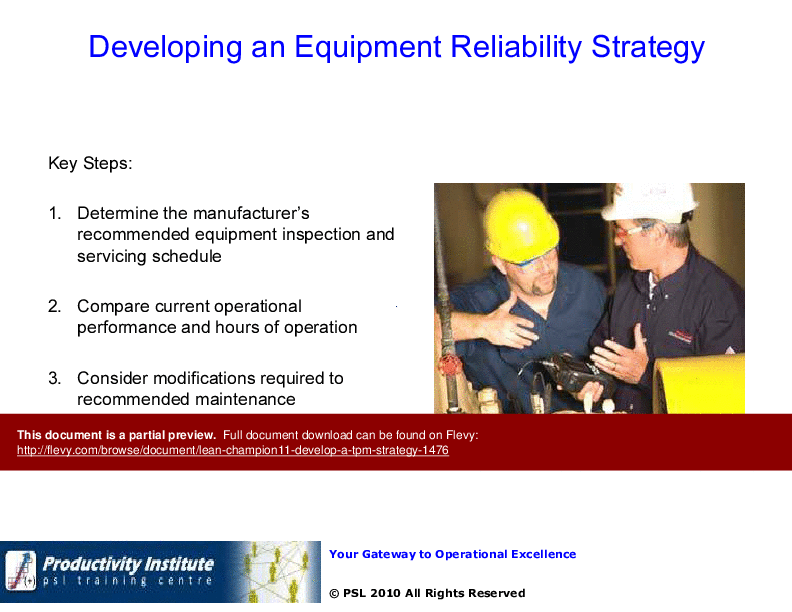
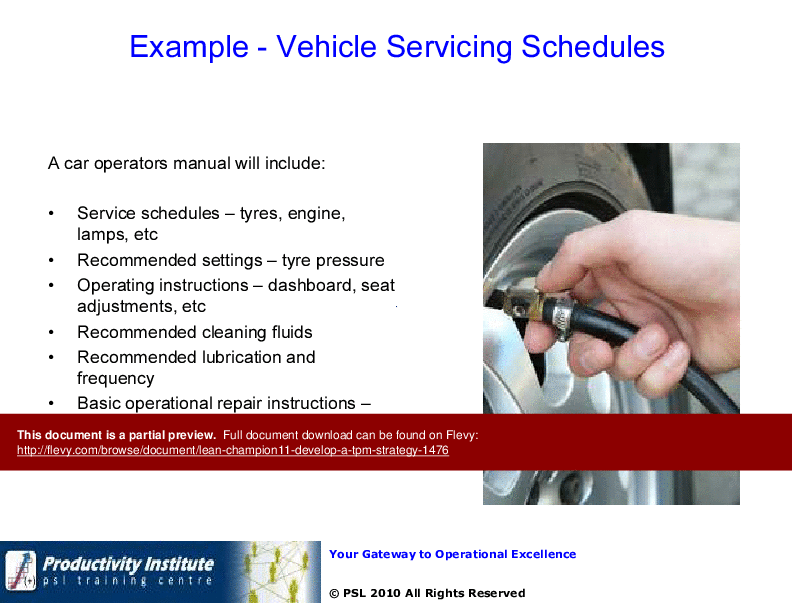
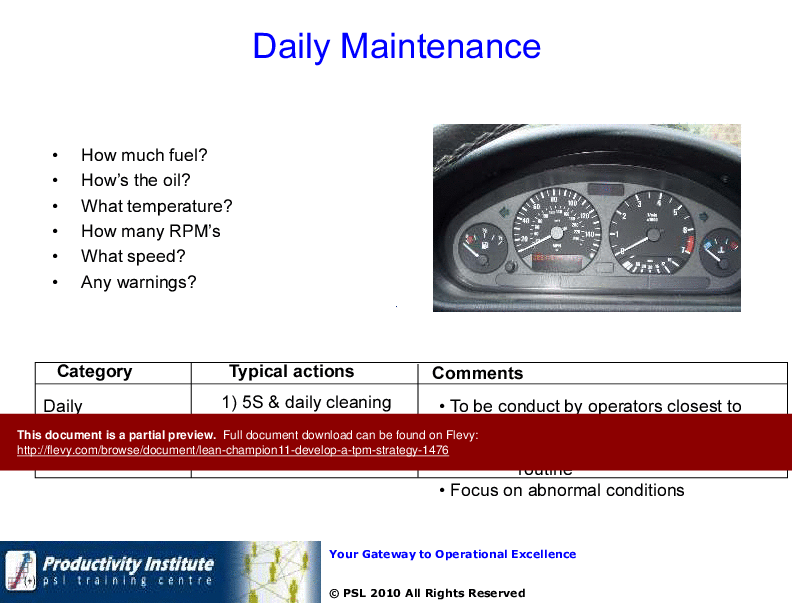
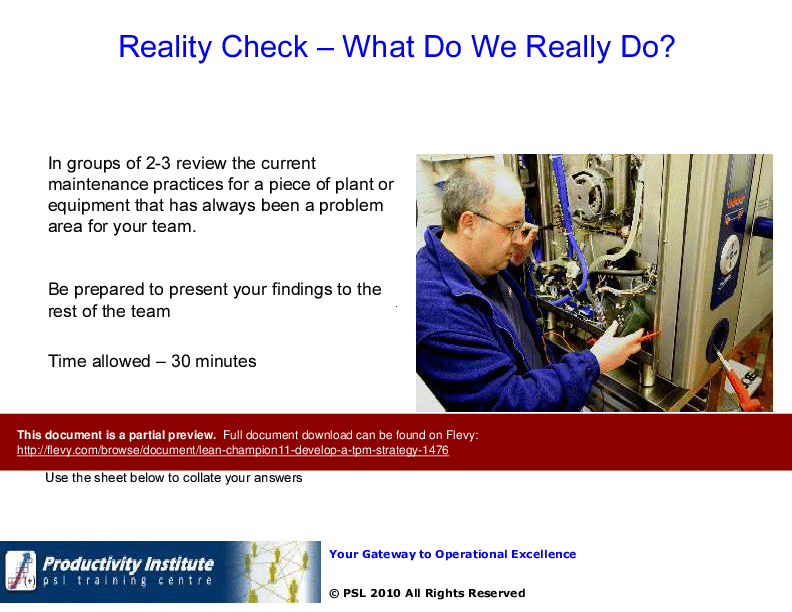
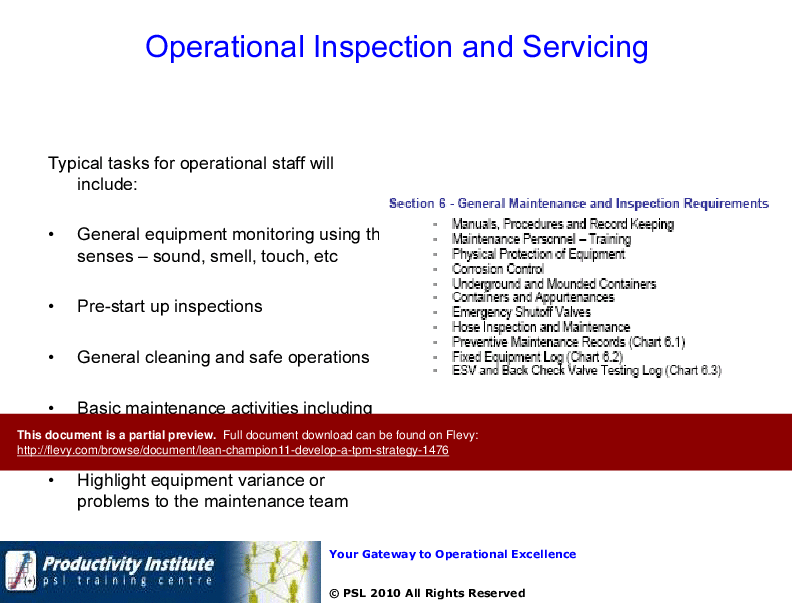
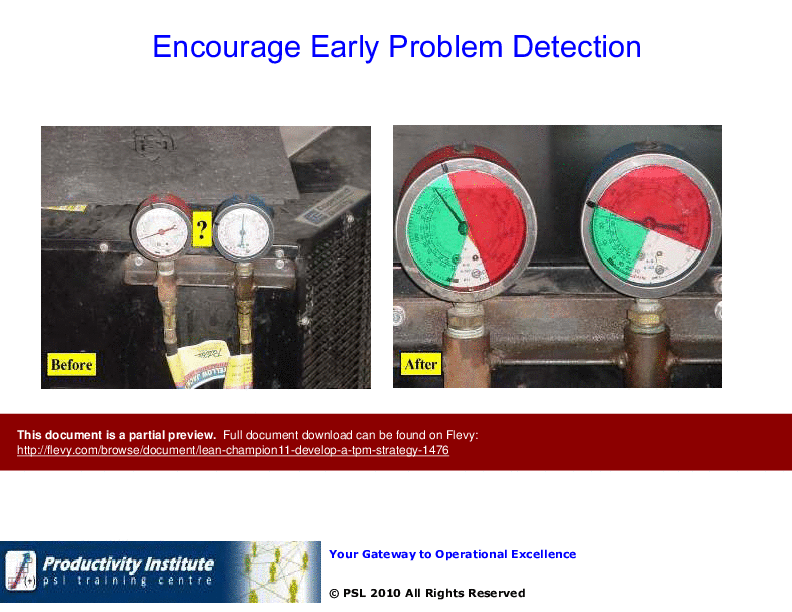
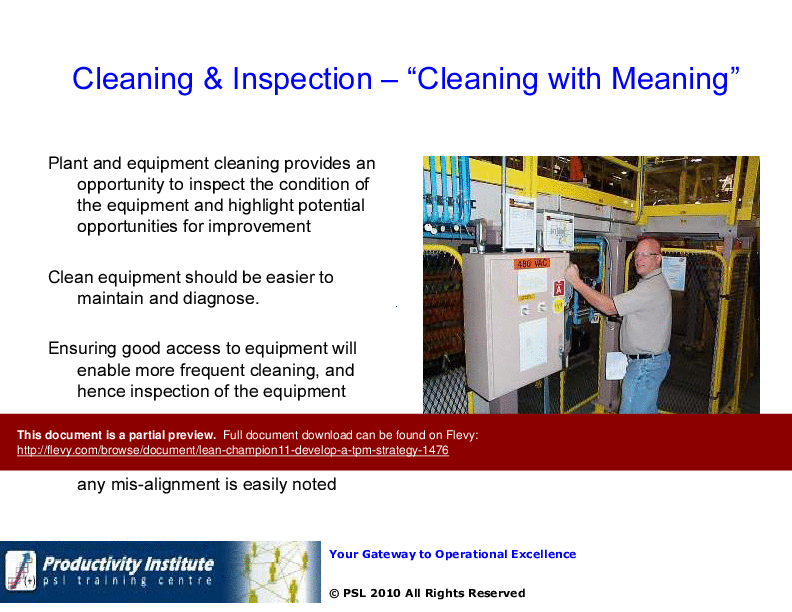
This module delves into the intricacies of developing a robust Equipment Reliability Strategy. It includes practical steps such as determining inspection schedules, comparing operational performance, and making necessary modifications. Real-world examples like vehicle servicing schedules and daily maintenance checks are provided to illustrate key concepts. Group activities focus on assessing current practices and identifying scheduling improvements, ensuring your team can present actionable findings. The module also emphasizes early problem detection, operational inspection, and the importance of cleaning and inspection routines. Comprehensive resources and skill assessment tools are included to support the implementation of a proactive maintenance strategy.
Got a question about the product? Email us at support@flevy.com or ask the author directly by using the "Ask the Author a Question" form. If you cannot view the preview above this document description, go here to view the large preview instead.
Executive Summary
This presentation, titled "Lean Champion Training Package: Module 11 - Implement a Proactive Maintenance Strategy," is designed to equip organizations with the tools and methodologies necessary to develop and implement an effective proactive maintenance strategy. The training focuses on enhancing equipment reliability, optimizing maintenance schedules, and fostering a culture of continuous improvement. By leveraging best practices and engaging key personnel, participants will learn to minimize downtime, reduce operational costs, and improve overall equipment effectiveness.
Who This Is For and When to Use
• Maintenance Managers and Supervisors
• Operations Managers and Team Leaders
• Production Planners and Schedulers
• Quality Assurance Personnel
• Safety Officers and Compliance Managers
Best-fit moments to use this deck:
• During the rollout of a new maintenance strategy
• When assessing current maintenance practices and identifying gaps
• In team workshops focused on improving equipment reliability
• For training sessions aimed at enhancing staff skills in maintenance activities
Learning Objectives
• Define the components of a proactive maintenance strategy.
• Develop a comprehensive maintenance schedule based on equipment needs.
• Assess current maintenance practices and identify areas for improvement.
• Engage key personnel in the maintenance strategy implementation process.
• Create a visual control system for tracking maintenance activities.
• Establish a training register for maintenance-related skills and competencies.
Table of Contents
• Introduction to Proactive Maintenance (page 3)
• Developing the Maintenance Strategy (page 5)
• Equipment Reliability Strategy (page 10)
• Daily Maintenance Practices (page 15)
• Assigning Responsibilities (page 20)
• Monitoring and Inspection Techniques (page 25)
• Training Needs Assessment (page 30)
• Implementation Plan (page 35)
Primary Topics Covered
• Maintenance Strategy Development - A structured approach to creating a maintenance strategy that aligns with operational goals and equipment needs.
• Equipment Reliability Strategy - Key steps to assess and enhance equipment reliability through effective inspection and servicing schedules.
• Daily Maintenance Practices - Routine checks and tasks performed by operators to ensure equipment is functioning optimally.
• Assigning Responsibilities - Guidelines for defining roles and responsibilities in the maintenance process to ensure accountability.
• Monitoring and Inspection Techniques - Methods for ongoing equipment condition monitoring to detect issues early and prevent failures.
• Training Needs Assessment - Identifying skill gaps and training requirements for staff involved in maintenance activities.
Deliverables, Templates, and Tools
• Maintenance strategy development template.
• Equipment inspection and servicing schedule template.
• Daily maintenance checklist for operators.
• Training register for documenting maintenance-related skills.
• Visual control board for tracking maintenance tasks.
• Proactive maintenance strategy analysis sheet.
Slide Highlights
• Overview of the proactive maintenance strategy framework.
• Visual examples of effective maintenance schedules and checklists.
• Case studies demonstrating successful implementation of maintenance strategies.
• Group activity slides encouraging collaboration and problem-solving.
• Templates for training needs assessment and skills development.
Potential Workshop Agenda
Introduction to Proactive Maintenance (30 minutes)
• Discuss the importance of proactive maintenance in operational excellence.
• Review the components of a successful maintenance strategy.
Developing the Maintenance Strategy (60 minutes)
• Break into groups to assess current practices and identify gaps.
• Present findings and recommendations for improvement.
Implementation Planning (45 minutes)
• Create an action plan for implementing the proactive maintenance strategy.
• Discuss roles and responsibilities for each team member.
Customization Guidance
• Tailor the maintenance strategy to fit specific operational needs and equipment types.

• Adjust training materials to reflect the current skill levels of staff.
• Incorporate company-specific terminology and practices into templates and checklists.
Secondary Topics Covered
• Corrective maintenance practices and their impact on reliability.
• The role of visual management in maintenance activities.
• Seasonal adjustments to maintenance schedules based on operational changes.
• Engaging operators in the maintenance process for better outcomes.
FAQ
What is a proactive maintenance strategy?
A proactive maintenance strategy focuses on preventing equipment failures through scheduled inspections, servicing, and continuous monitoring rather than reacting to breakdowns.
How can I assess current maintenance practices?
Evaluate existing procedures by consulting with relevant personnel and comparing them against best practices and manufacturer recommendations.
What are the key components of a maintenance schedule?
A maintenance schedule should include inspection frequencies, servicing tasks, responsible personnel, and documentation of completed activities.
How do I involve other key staff in the maintenance strategy?
Engage operators, planners, and management in discussions about the strategy, ensuring their input and buy-in for successful implementation.
What training is necessary for staff involved in maintenance?
Training should cover technical skills, safety protocols, equipment operation, and inspection techniques to ensure staff are competent in their roles.
How often should maintenance practices be reviewed?
Regular reviews should occur whenever operational parameters change, such as increased hours of operation or modifications to equipment.
What tools can help monitor equipment condition?
Utilize condition monitoring tools, checklists, and visual indicators to track equipment performance and identify abnormalities early.
What is the role of operators in the maintenance process?
Operators play a crucial role in daily maintenance by conducting inspections, reporting issues, and performing basic maintenance tasks.
Glossary
• Proactive Maintenance - A strategy focused on preventing equipment failures through scheduled inspections and servicing.
• Equipment Reliability - The ability of equipment to perform its intended function without failure.
• Daily Maintenance - Routine checks and tasks performed to ensure equipment is operating correctly.
• Corrective Maintenance - Repairs made after equipment failure to restore functionality.
• Visual Control Board - A tool used to track maintenance tasks and schedules visually.
• Training Register - A document that records training activities and competencies of staff.
• Inspection Checklist - A list of items to be checked during equipment inspections.
• Condition Monitoring - The process of continuously monitoring equipment performance to detect issues early.
• Operational Parameters - The specific conditions under which equipment operates effectively.
• Maintenance Schedule - A planned timetable for conducting maintenance activities on equipment.
• Skills Development - The process of enhancing staff competencies related to maintenance tasks.
• Manufacturer’s Recommendations - Guidelines provided by equipment manufacturers regarding maintenance practices.
• Equipment Tagging - A system for identifying equipment and tracking maintenance actions required.
• Training Needs Assessment - The process of identifying gaps in skills and knowledge among staff.
• Operational Inspections - Regular checks performed by staff to monitor equipment condition.
• Maintenance Planning - The process of organizing and scheduling maintenance activities.
• Continuous Improvement - Ongoing efforts to enhance processes and practices within an organization.
• Visual Management - Techniques used to make information easily accessible and understandable in the workplace.
• Team Collaboration - Working together as a group to achieve common goals in maintenance practices.
• Equipment Effectiveness - A measure of how well equipment performs its intended function relative to its potential.
Source: Best Practices in TPM, Lean Six Sigma Black Belt PowerPoint Slides: Lean Champion Black Belt 11 - Develop a TPM Strategy PowerPoint (PPT) Presentation Slide Deck, OpEx Academy NZ
This document is available as part of the following discounted bundle(s):
Save %!
Lean Champion Black Belt Training Series - 15 Modules
This bundle contains 15 total documents. See all the documents to the right.
|
Receive our FREE presentation on Operational Excellence
This 50-slide presentation provides a high-level introduction to the 4 Building Blocks of Operational Excellence. Achieving OpEx requires the implementation of a Business Execution System that integrates these 4 building blocks. |